❋
The Hill Home
Glen Arbor, Michigan
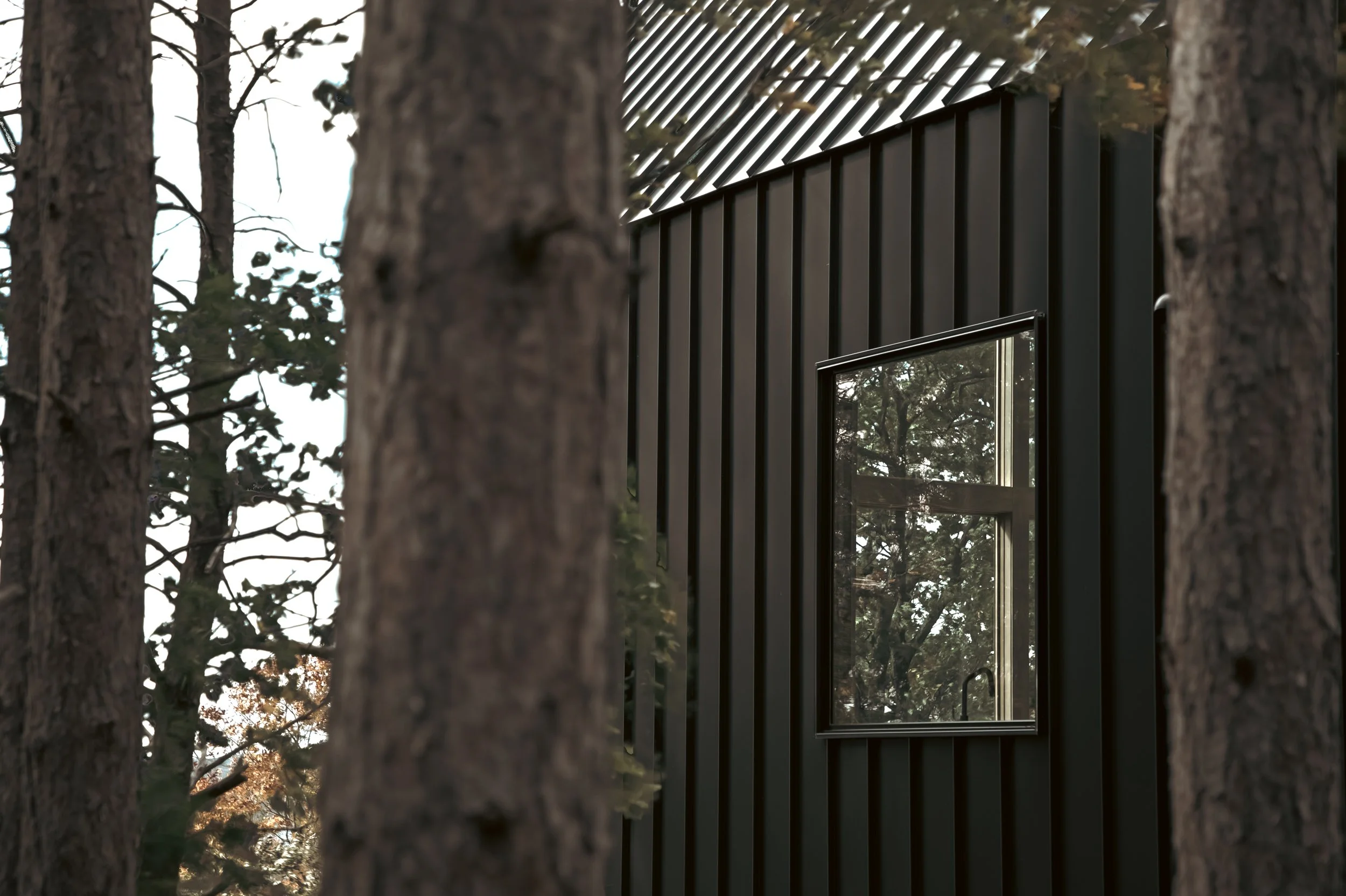
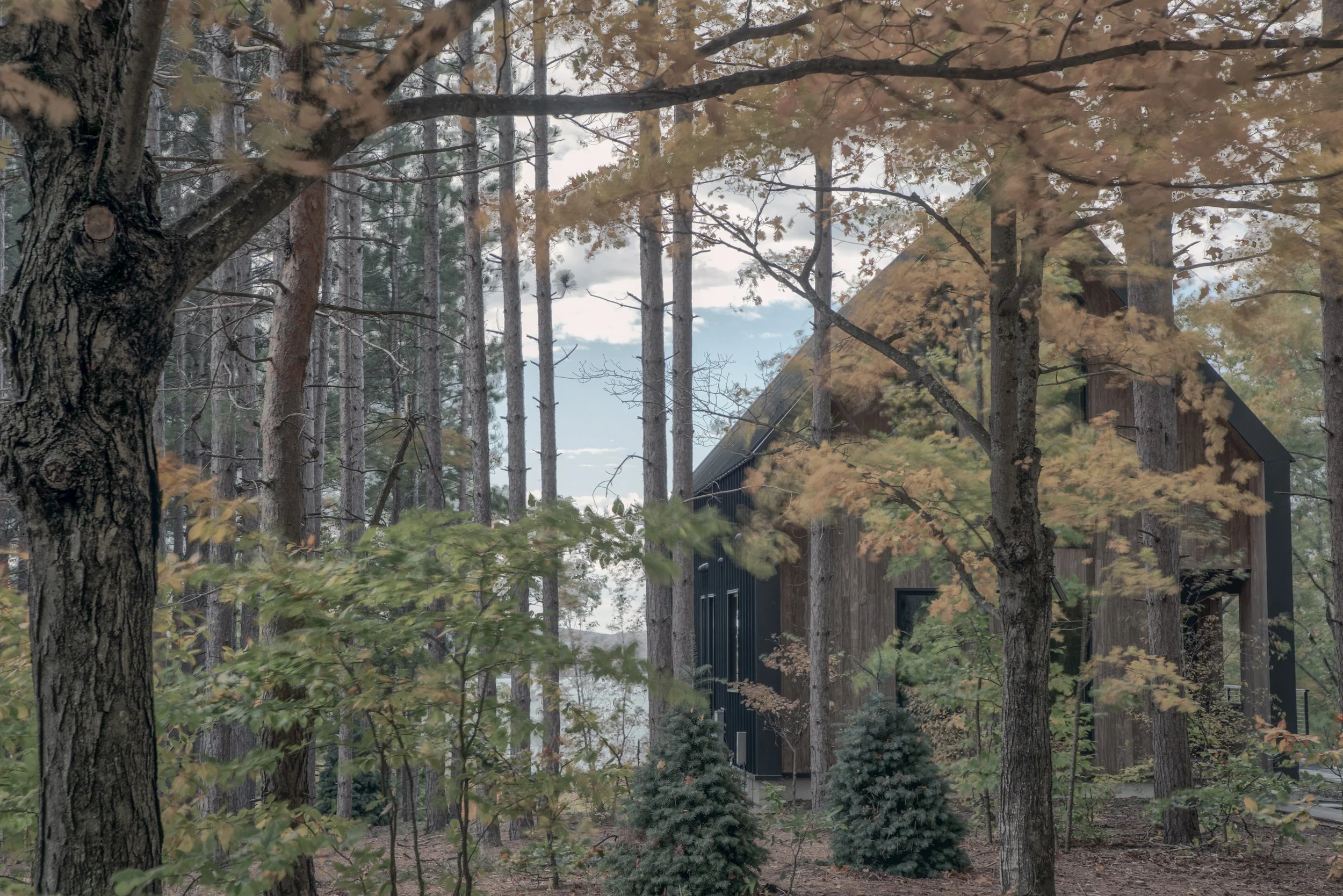
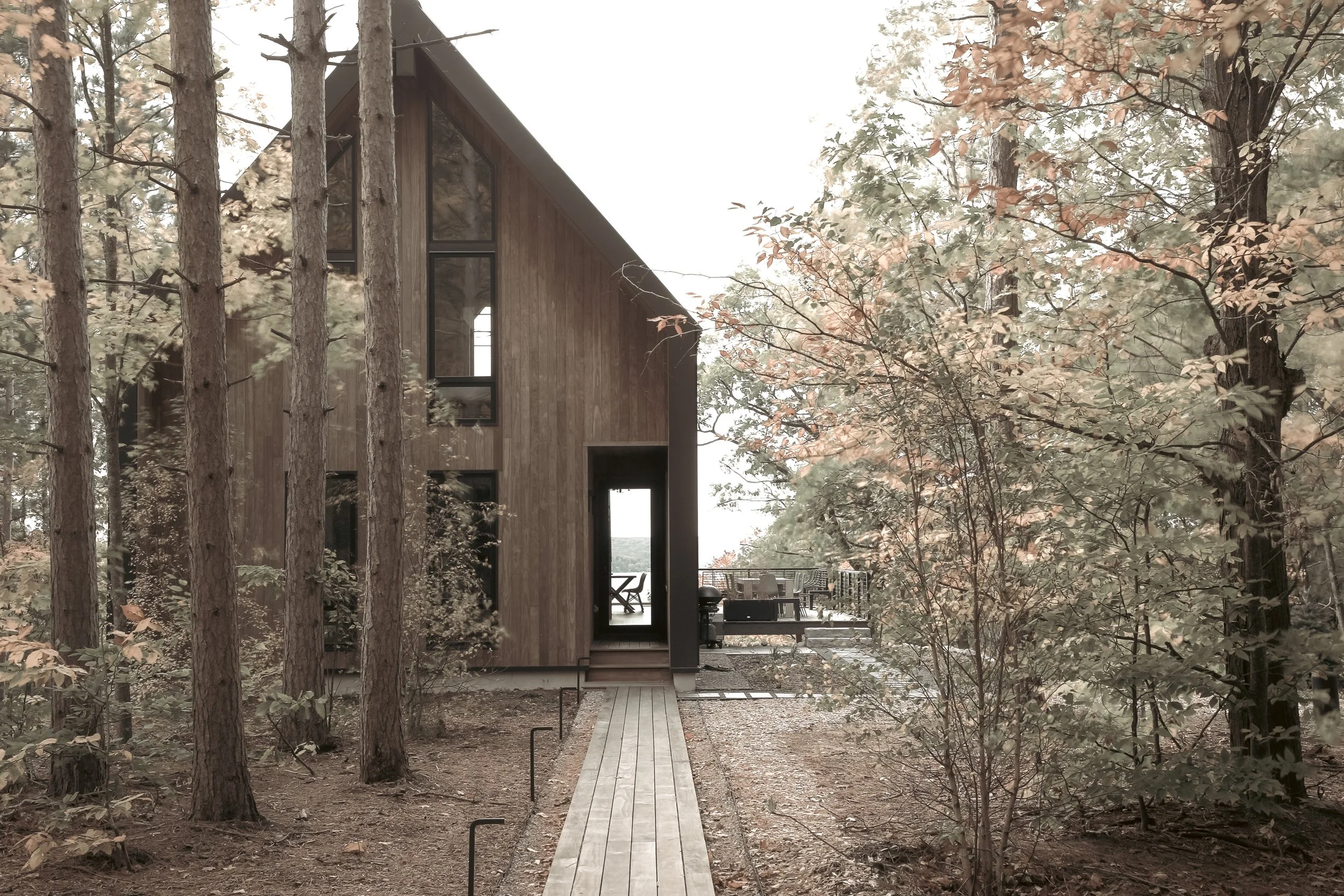
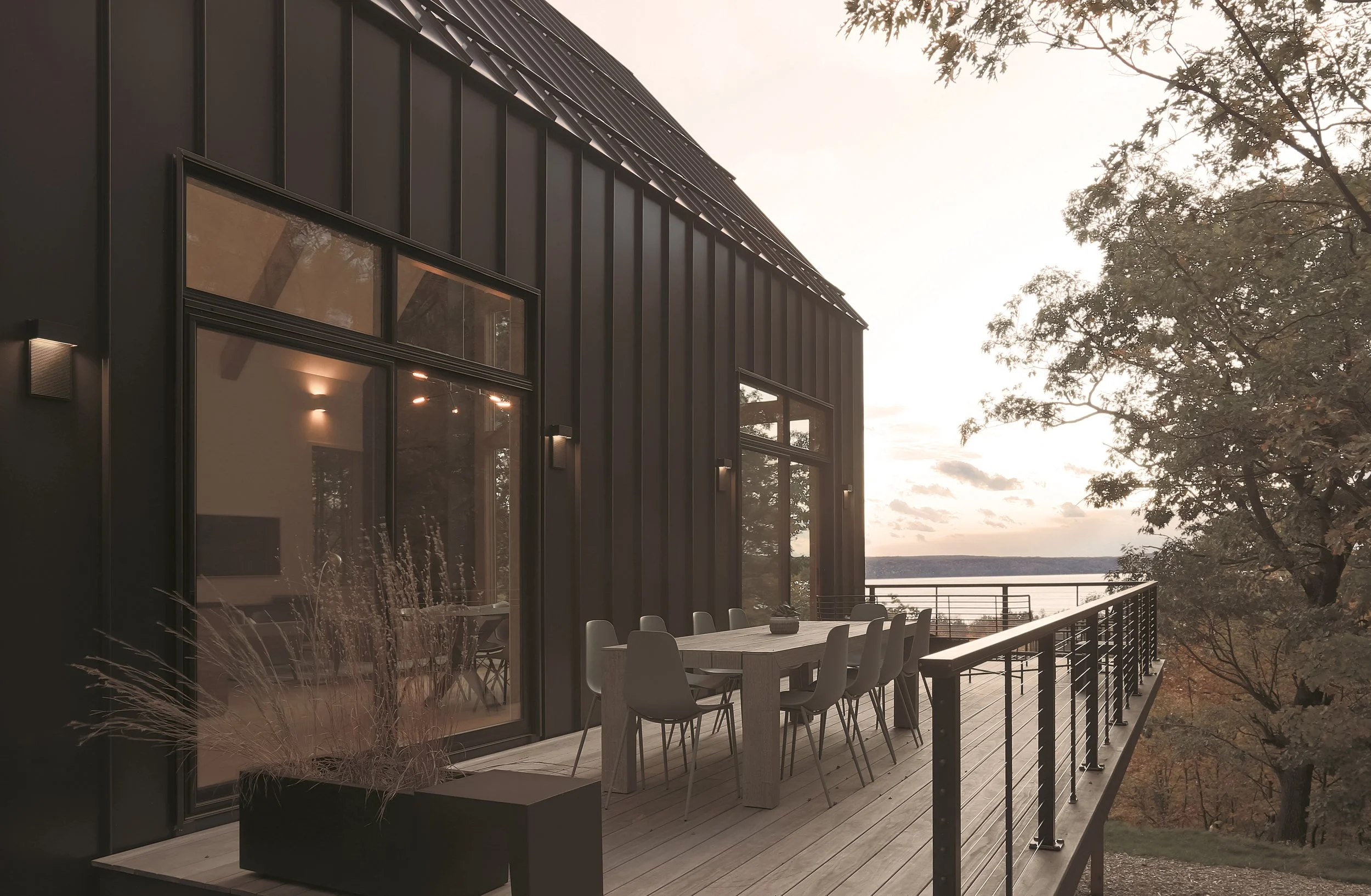
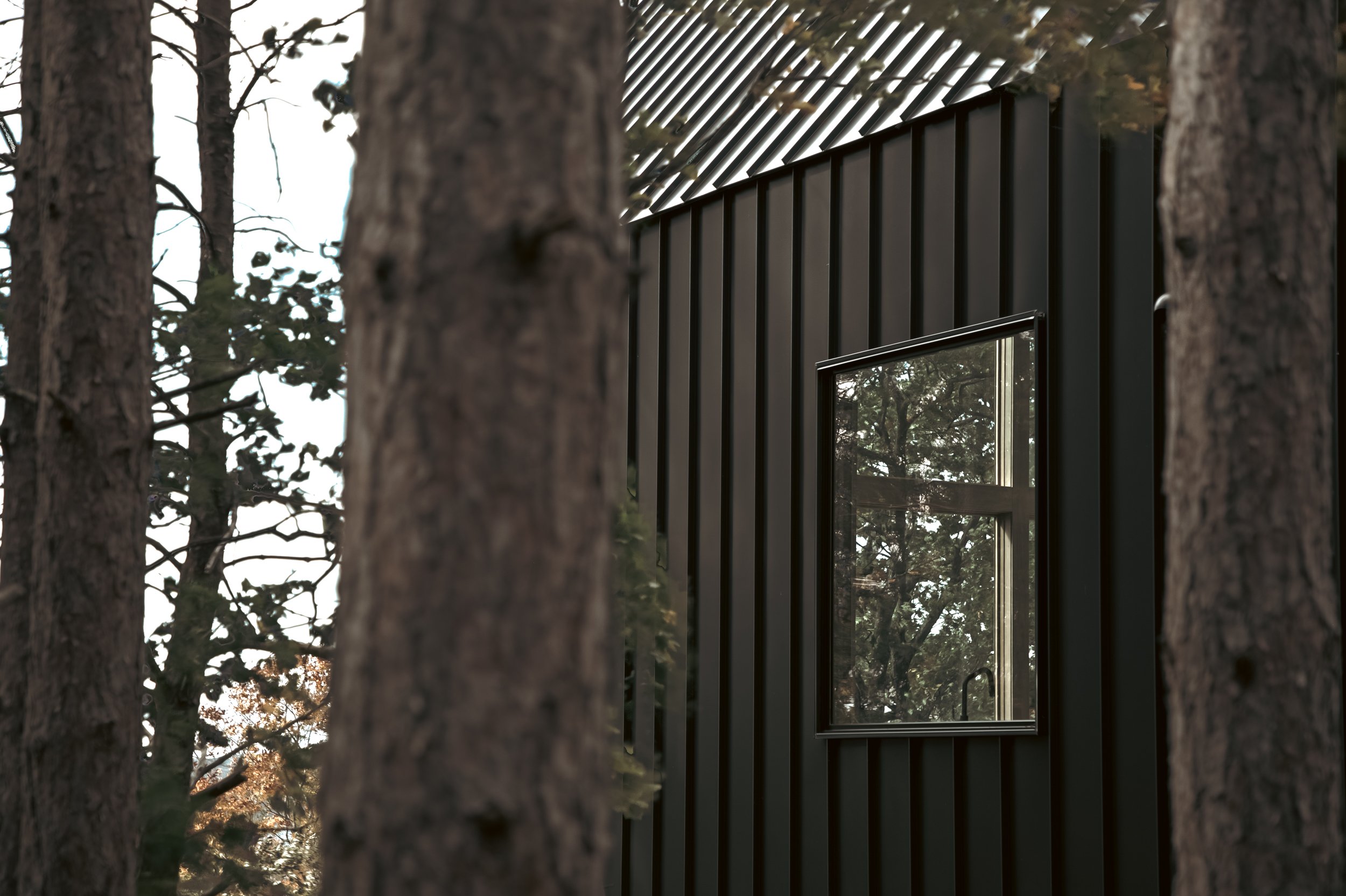
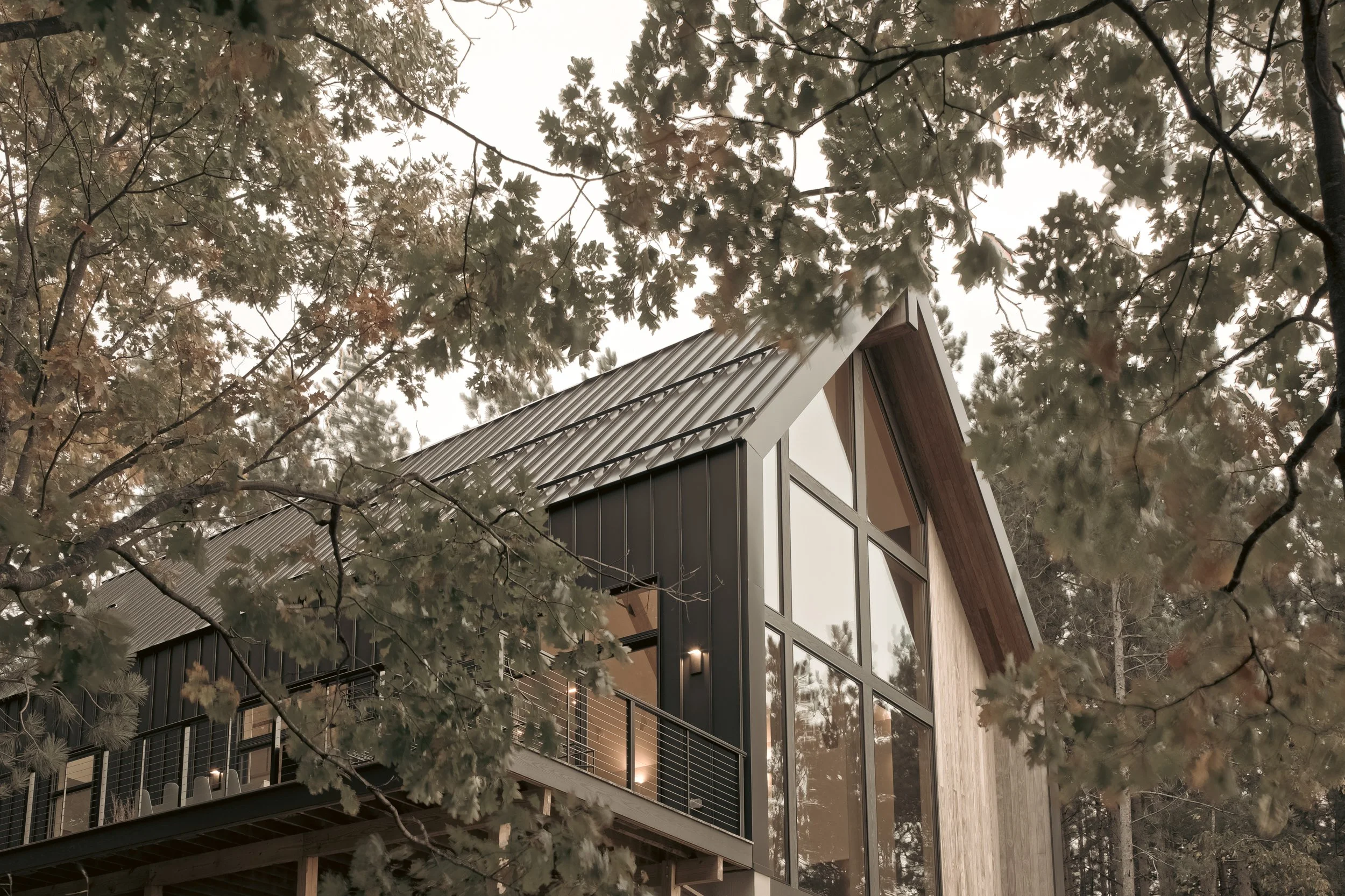
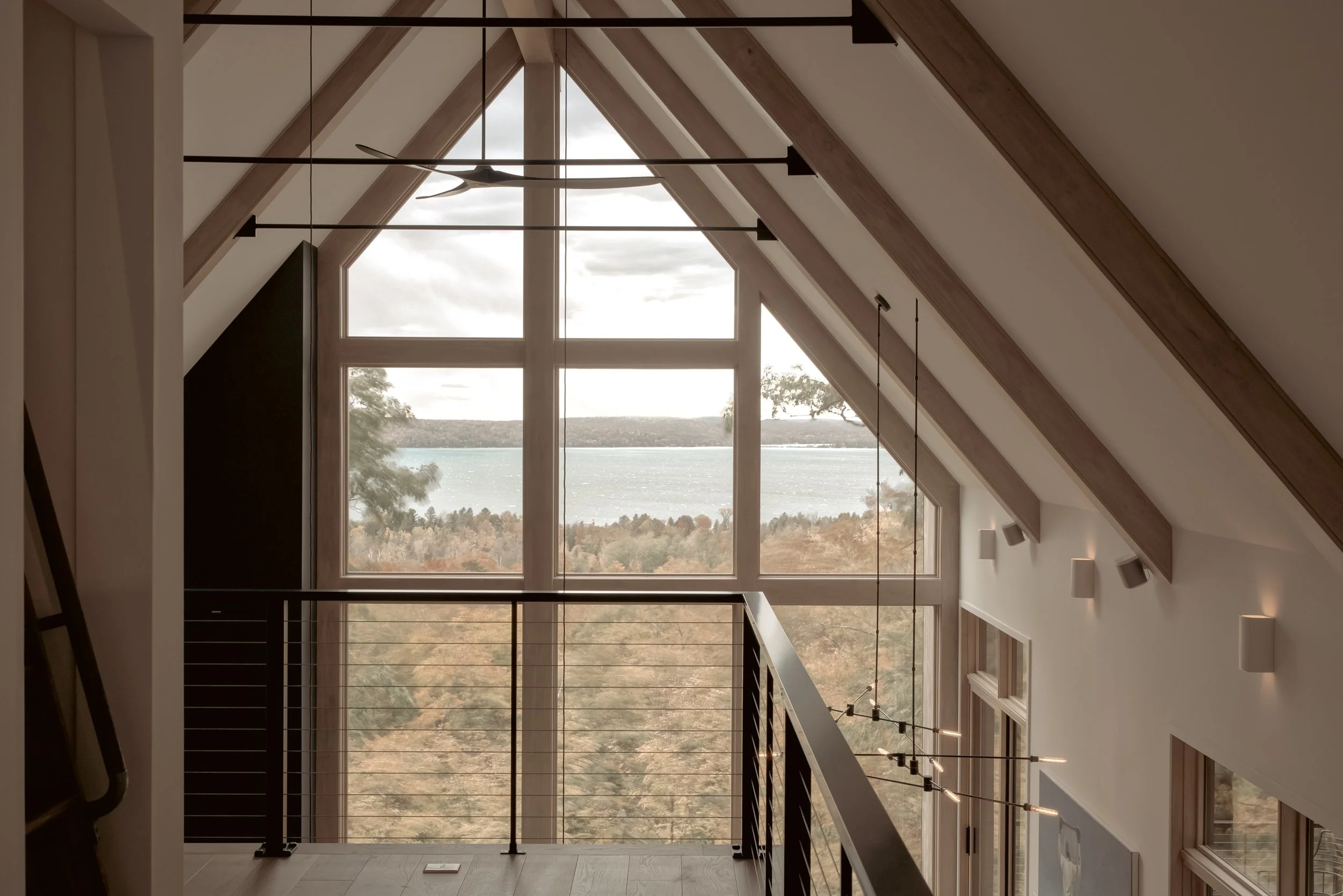
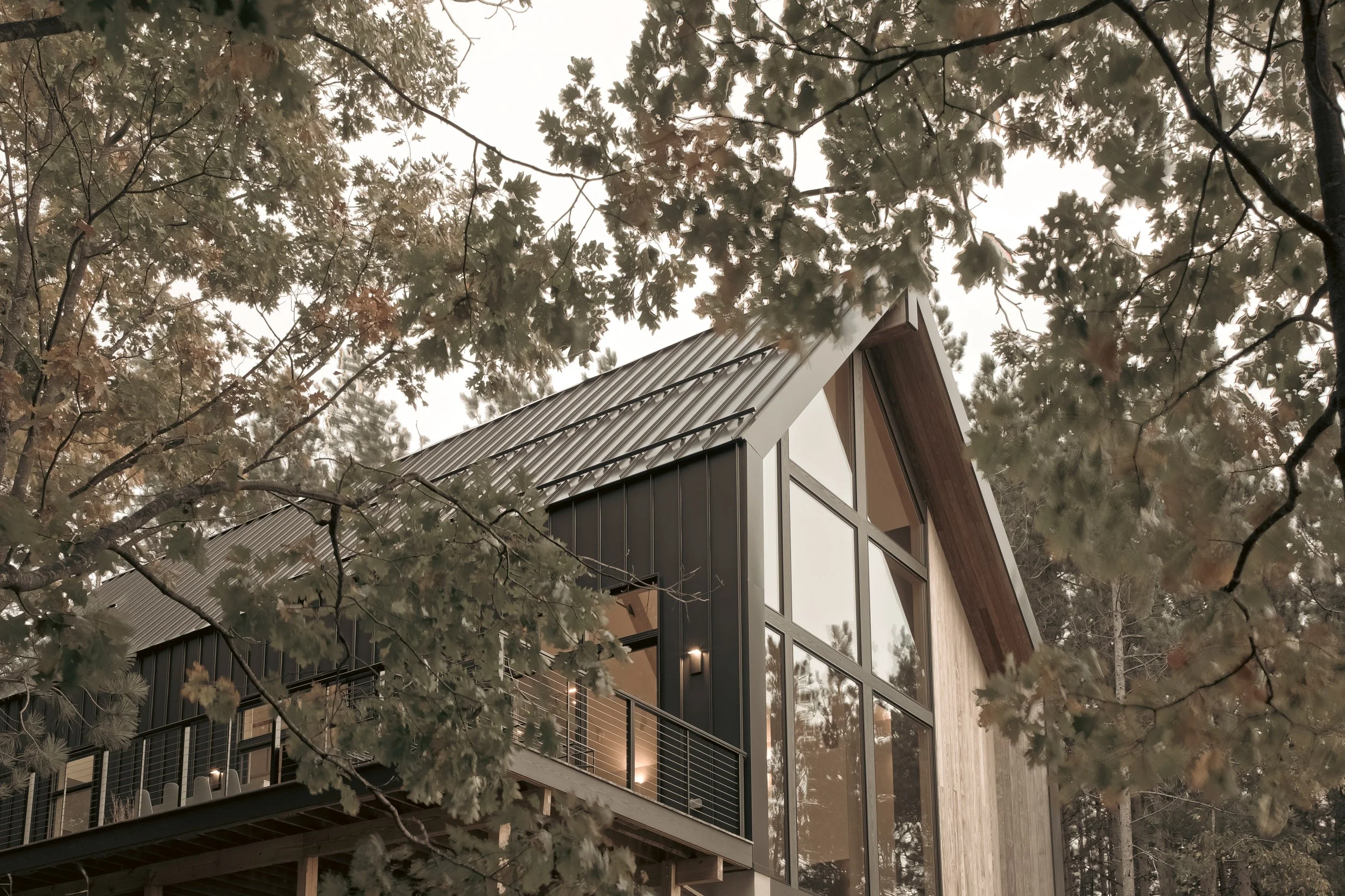
The structure rises to a 28-foot peak, echoing the vertical rhythm of the surrounding pine forest. Its tall, narrow form reinforces a sense of continuity with the site, allowing the building to read as an extension of the landscape rather than an object placed upon it. Roof and walls are clad in standing-seam black steel, selected for durability and low maintenance, and for its ability to recede visually into the shadowed forest canopy.
The primary façade is wrapped in Kebony, a naturally modified wood derived from Pinus radiata. Treated with a bio-based process that permanently hardens the wood’s cellular structure, the material offers the performance of a hardwood with the warmth and texture of natural timber. Over time, the cladding will weather gracefully to a soft silvery gray, further anchoring the building to its environment.
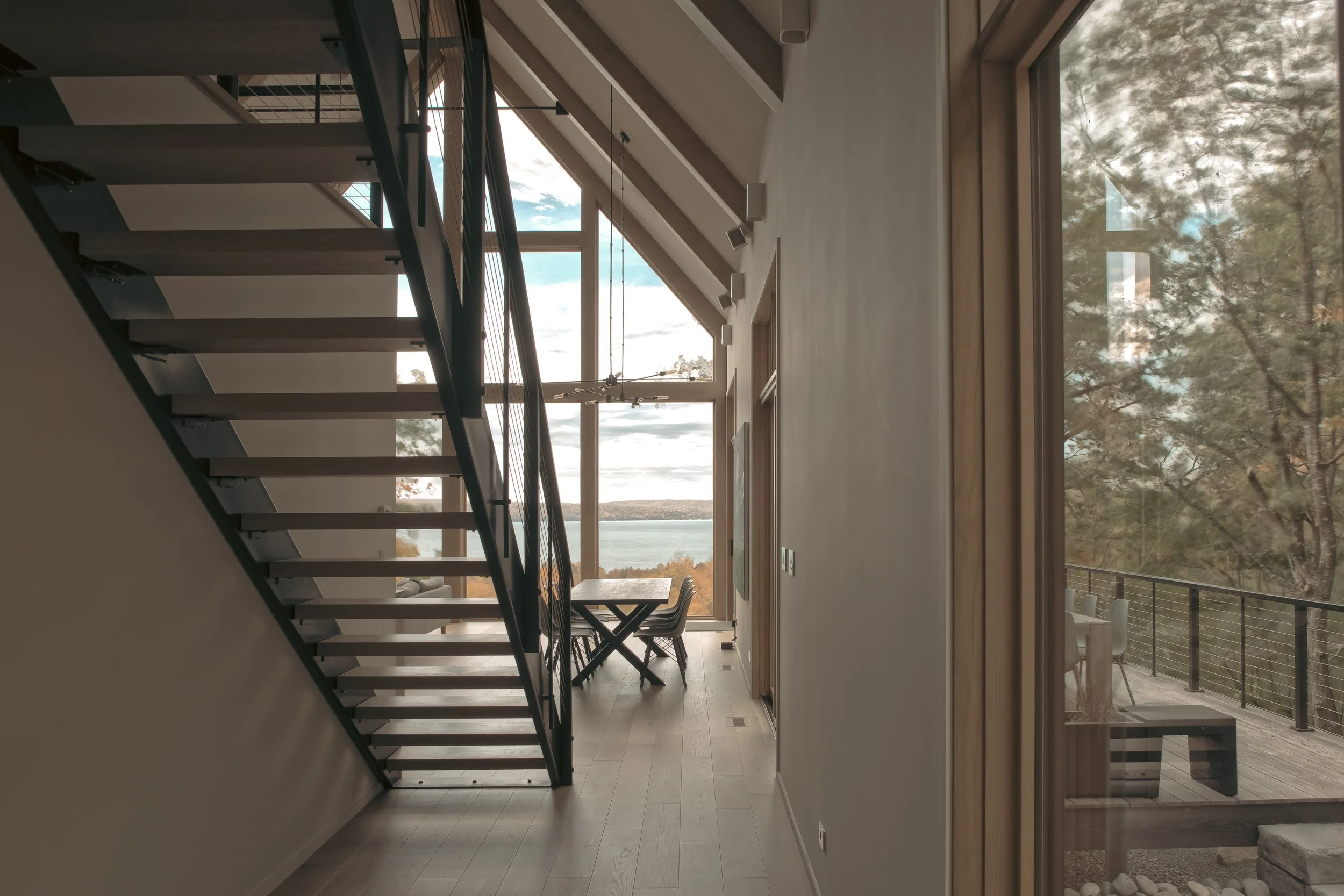
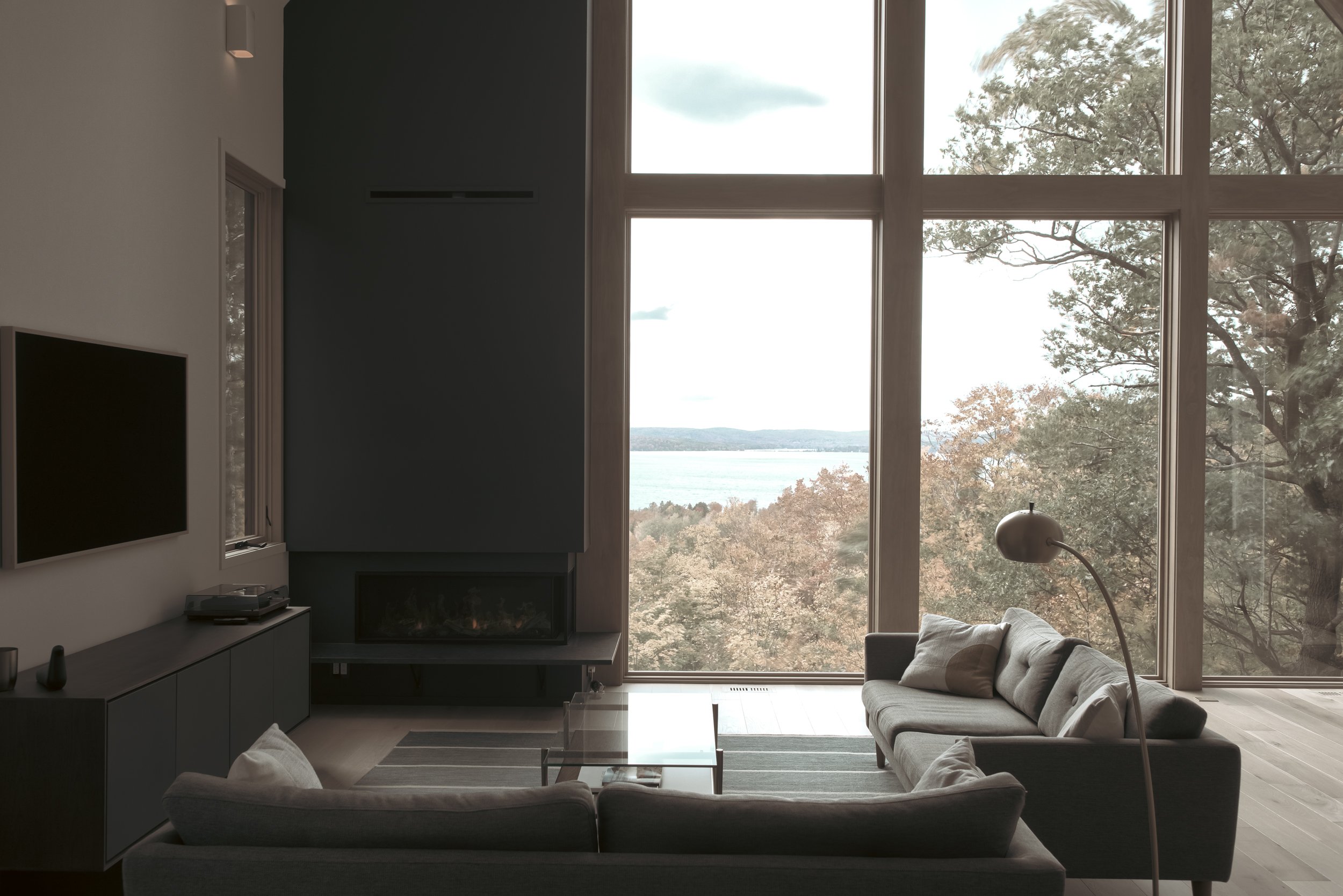
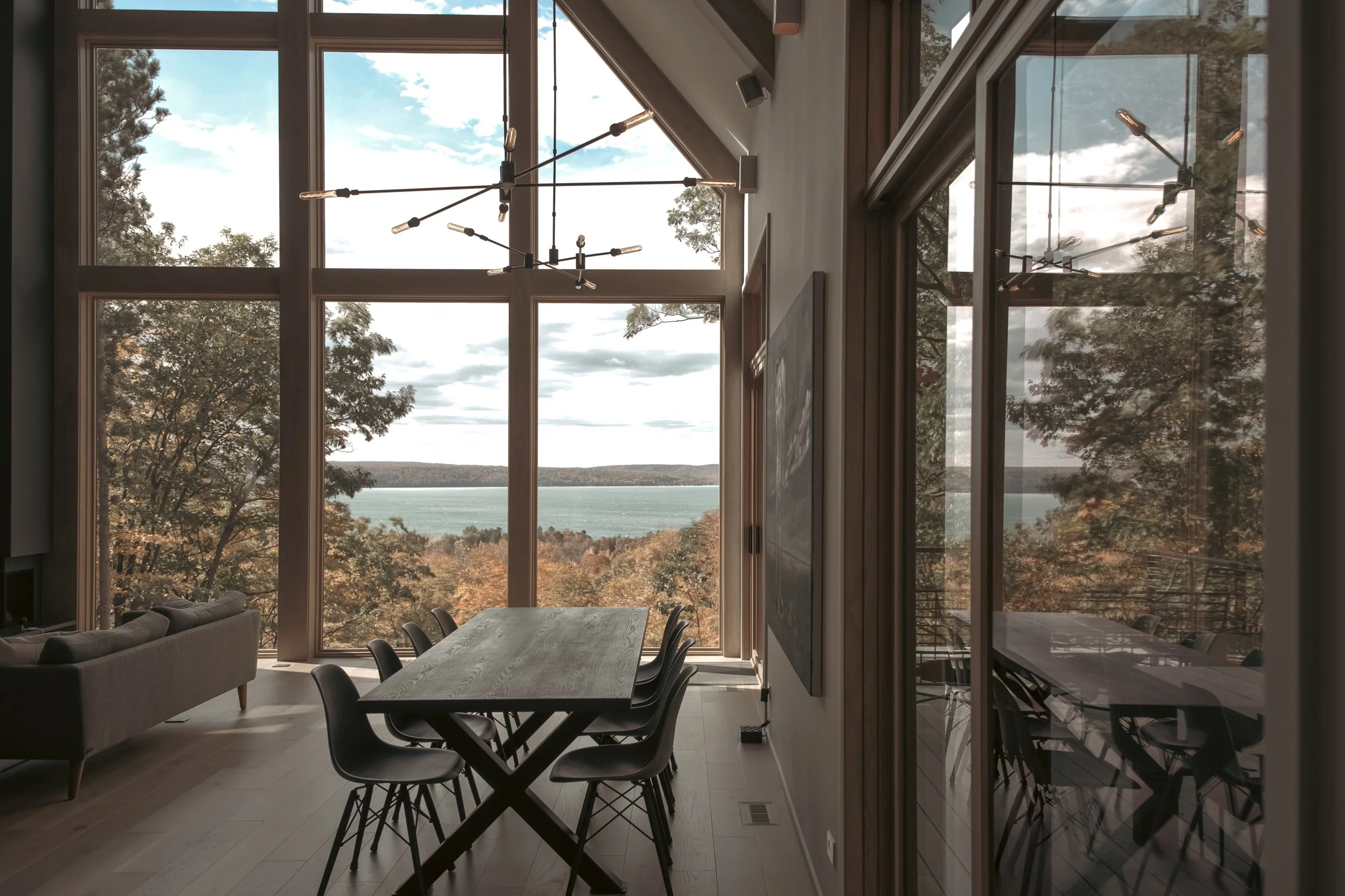
From the entry, a clear sightline carries through the great room and terminates at a full-height glass wall overlooking Glen Lake—the organizing principle of the house. The wall is carefully composed to maximize transparency within the constraints of wood construction, concentrating structure where required and allowing the remaining surface to dissolve into glass. A black steel fireplace is integrated into the structural zone, reinforcing the diagram of solid and void while preserving uninterrupted views.
To protect the visual connection to the landscape, no deck interrupts the primary elevation. Instead, outdoor living is shifted to the side of the house, where it offers its own framed view of the lake without compromising the main interior axis.
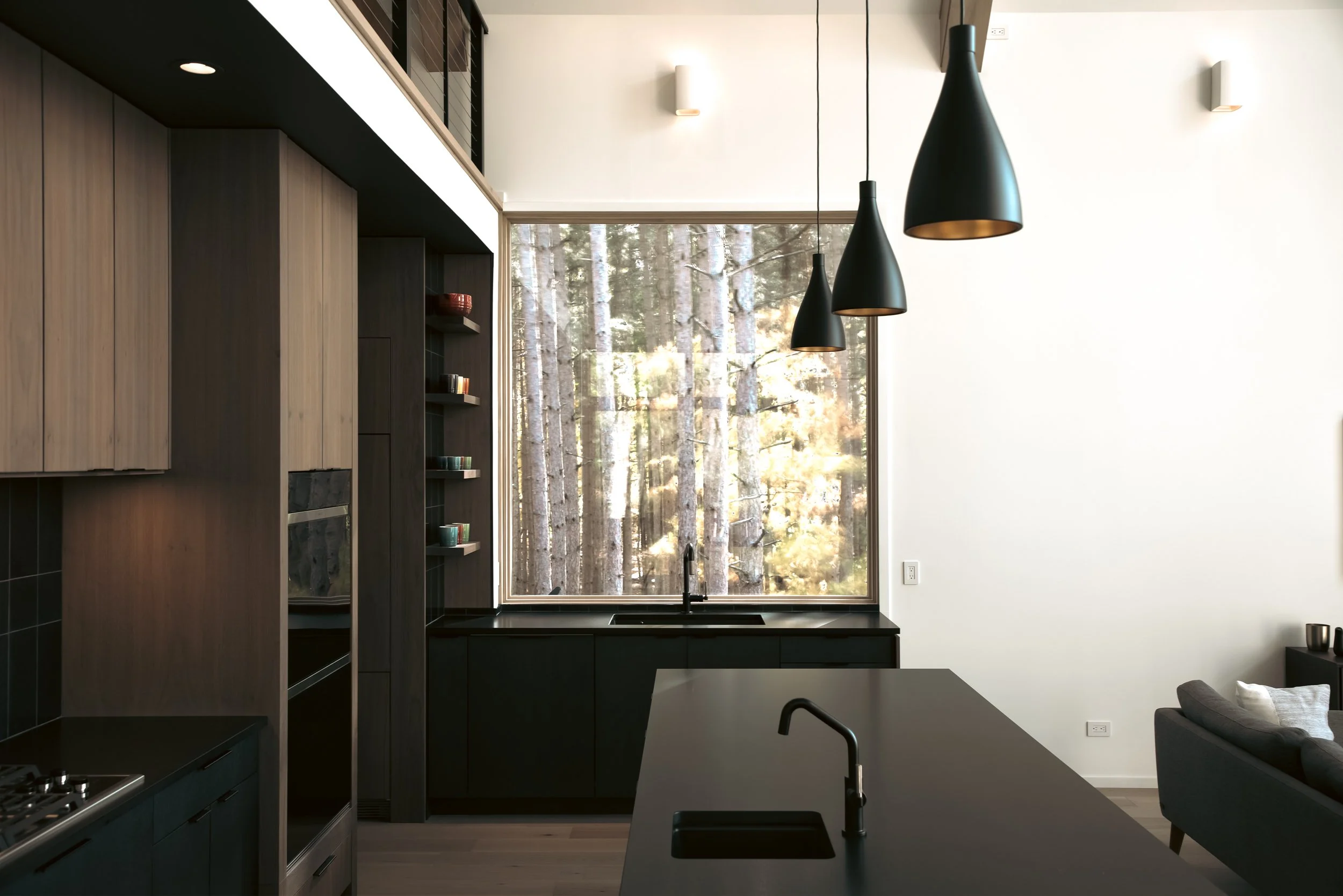
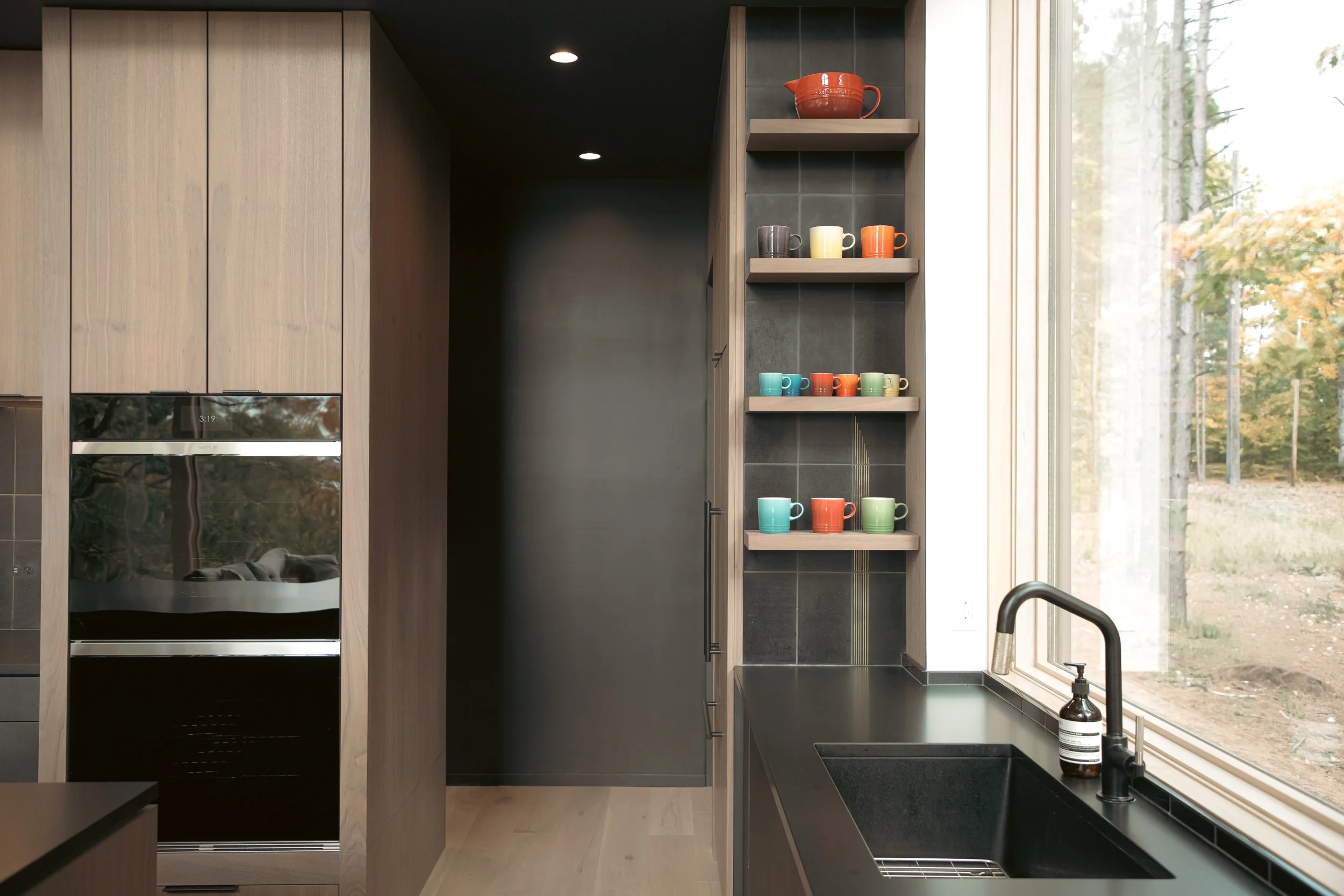
Inside, the material palette is intentionally restrained. Pale white oak floors and white walls create a desaturated backdrop that allows light and landscape to remain dominant. The kitchen is designed as a continuous, streamlined element along the rear wall, featuring custom oiled-walnut cabinetry with precisely book-matched grain patterns that read as crafted architectural surfaces. Dark stone countertops and subtly textured tile complete the interior with depth and contrast, without competing with the view beyond.
Throughout the project, form, material, and spatial sequence work together to prioritize landscape, durability, and long-term clarity—allowing the architecture to quietly frame, rather than overshadow, its setting.